
Ford Escape: Driving Hints / Driving Through Shallow Water
WARNING: Do not attempt to cross a deep or flowing body of water. Failure to follow this instruction could result in the loss of control of your vehicle, personal injury or death.
Note: Driving through standing water can cause vehicle damage.
Note: Engine damage can occur if water enters the air filter.
Before driving through standing water, check the depth. Never drive through water that is higher than the bottom of the front rocker area of your vehicle.
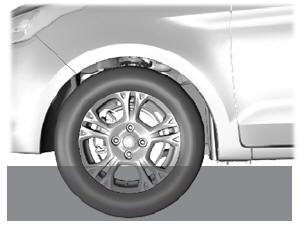
When driving through standing water, drive very slowly and do not stop your vehicle. Your brake performance and traction could be limited. After driving through water and as soon as it is safe to do so:
- Lightly press the brake pedal to dry the brakes and to check that they work.
- Turn the steering wheel to check that the steering power assist works.
Check the function of the following:
- Horn
- Exterior lights
 Cold Weather Precautions. Breaking-In. Driving Economically
Cold Weather Precautions
The functional operation of some
components and systems can be affected
at temperatures below approximately
-13°F (-25°C)...
 Floor Mats
WARNING: Use a floor mat
designed to fit the footwell of your
vehicle that does not obstruct the pedal
area. Failure to follow this instruction
could result in the loss of control of your
vehicle, personal injury or death...
Other information:
Ford Escape 2020-2026 Service Manual: Removal and Installation - Steering Wheel
Special Tool(s) / General Equipment Adhesive Tape Removal NOTICE: To prevent damage to the clockspring, make sure the front wheels are in the straight-ahead position. NOTE: Removal steps in this procedure may contain installation details...
Ford Escape 2020-2026 Service Manual: General Procedures - Valve Guide Inner Diameter
Check NOTE: Refer to the appropriate Section 303-01 for the specification. NOTE: Valve guides tend to wear in an hourglass pattern. The ball gauge can be inserted into the combustion chamber side of the valve guide, if necessary. Use a ball gauge to determine the inside diameter of the valve guides in 2 directions at the top, middle and bottom of the valve guide...
Categories
- Manuals Home
- 4th Generation Ford Escape Owners Manual
- 4th Generation Ford Escape Service Manual
- Adjusting the Headlamps
- Switching the Rear Window Wiper On and Off. Reverse Wipe
- Power Outlet - Vehicles With: 12V Power Outlet
- New on site
- Most important about car
Symbols Glossary
These are some of the symbols you may see on your vehicle.
 Air conditioning system
