
Ford Escape 2020-2026 Service Manual / Electrical / Electronic Feature Group / Passive Anti-Theft System (PATS) / General Procedures - Key Programming Using Two Programmed Keys
Ford Escape: Passive Anti-Theft System (PATS) / General Procedures - Key Programming Using Two Programmed Keys
Programming
NOTE: This procedure works only if 2 or more programmed keys are available.
NOTE: This procedure works only if the customer spare key programming is enabled.
NOTE: When programming keys, the RKE transmitter and the PATS portion of the key are programmed at the same time.
-
Insert the first programmed PATS
key into the ignition lock cylinder and turn the ignition lock
cylinder to RUN (maintain the key in RUN for approximately 3 seconds).
-
Turn the first key to OFF and remove the key from the ignition lock cylinder.
-
Within 10 seconds of turning the first key to OFF, insert a second
programmed PATS key into the ignition lock cylinder and turn the key to
RUN (maintain the key in RUN for approximately 3 seconds).
-
Turn the second key to OFF and remove the key from the ignition lock cylinder.
-
Within 10 seconds of turning the second key to OFF, insert the new, unprogrammed PATS
key into the ignition lock cylinder and turn the ignition lock
cylinder to RUN (maintain the key in RUN for approximately 6 seconds).
-
NOTE: See the Owner's Literature for maximum number of keys that can be programmed to the vehicle.
Repeat steps 1-5 to program additional keys.
 General Procedures - Anti-Theft Key Programming - Scan Tool
Programming
NOTE:
A passive key with a depleted battery(ies) only starts the vehicle when
in the backup starting location. The RKE functionality remains
inoperative until the key battery(ies) is replaced...
 Removal and Installation - Passive Anti-Theft System (PATS) Transceiver
Removal
Remove the steering column shrouds.
Refer to: Steering Column Shrouds (501-05 Interior Trim and Ornamentation, Removal and Installation)...
Other information:
Ford Escape 2020-2026 Service Manual: Removal and Installation - Headlamp Bulb
Removal Low beam bulb, vehicles equipped with halogen headlamps Remove the low beam headlamp bulb cover. Remove the low beam headlamp bulb. Disconnect the electrical connector. Rotate the low beam headlamp bulb counterclockwise and remove the bulb holder from the headlamp assembly...
Ford Escape 2020-2026 Owners Manual: Closing the Liftgate
Closing the Liftgate From Outside Your Vehicle WARNING: It is extremely dangerous to ride in a cargo area, inside or outside of a vehicle. In a crash, people riding in these areas are more likely to be seriously injured or killed. Do not allow people to ride in any area of your vehicle that is not equipped with seats and seatbelts...
Categories
- Manuals Home
- 4th Generation Ford Escape Owners Manual
- 4th Generation Ford Escape Service Manual
- Switching the Lane Keeping System On and Off. Switching the Lane Keeping System Mode. Alert Mode
- Fuel Quality
- Opening and Closing the Hood
- New on site
- Most important about car
Under Hood Fuse Box
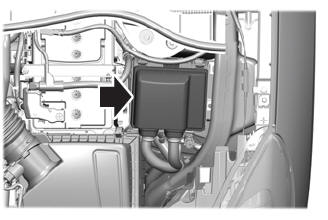
Locating the Under Hood Fuse Box
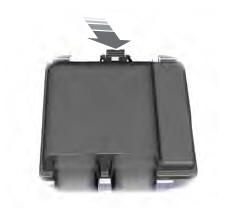
Accessing the Under Hood Fuse Box

Copyright © 2026 www.fordescape4.com