Ford Escape: Engine / Removal and Installation - Timing Chain Tensioner
Removal
NOTICE: Do not loosen or remove the crankshaft pulley bolt without first installing the special tools as instructed in this procedure. The crankshaft pulley and the crankshaft timing sprocket are not keyed to the crankshaft. The crankshaft, the crankshaft sprocket and the pulley are fitted together by friction. For that reason, the crankshaft sprocket is also unfastened if the pulley bolt is loosened. Before any repair requiring loosening or removal of the crankshaft pulley bolt, the crankshaft and camshafts must be locked in place by the special service tools, otherwise severe engine damage can occur.
NOTICE: During engine repair procedures, cleanliness is extremely important. Any foreign material, including any material created while cleaning gasket surfaces, that enters the oil passages, coolant passages or the oil pan can cause engine failure.
-
Remove the engine front cover.
Refer to: Engine Front Cover (303-01B Engine - 2.0L EcoBoost (177kW/240PS) – MI4, Removal and Installation).
-
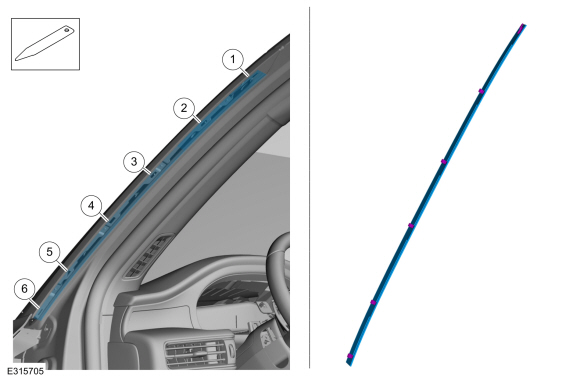
Remove the bolts and the timing chain tensioner.
 |
Installation
NOTE: If the timing chain tensioner plunger is not pinned in the compressed position, follow the next step.
-
Reset the timing chain tensioner.
-
Position the timing chain tensioner in a soft-jawed vise.
-
Spread the ends of the ratchet wire clip apart.
-
Using the soft-jawed vise, compress the plunger to the reset position.
-
Install a locking pin in the 2 holes of the timing chain tensioner body to hold the plunger in place.
-
Position the timing chain tensioner in a soft-jawed vise.
.jpg) |
-
NOTE: Do not remove the locking pin until the tensioner bolts are tightened.
-
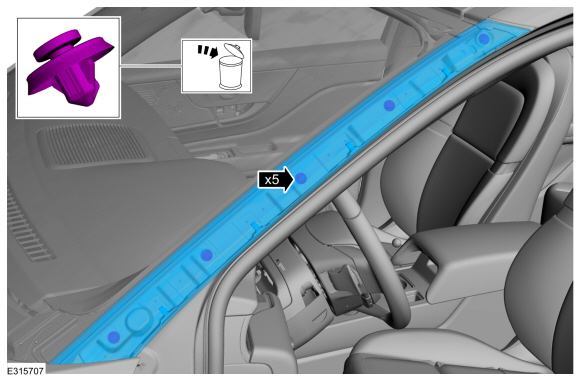
Install the timing chain tensioner and the bolts.
Torque: 97 lb.in (11 Nm)
-
Remove the locking pin.
-
Install the timing chain tensioner and the bolts.
 |
-
Install the engine front cover.
Refer to: Engine Front Cover (303-01B Engine - 2.0L EcoBoost (177kW/240PS) – MI4, Removal and Installation).
 Removal and Installation - Timing Chain
Removal
NOTE:
During engine repair procedures, cleanliness is extremely
important. Any foreign material, including any material created while
cleaning gasket surfaces, that enters the oil passages, coolant passages
or the oil pan can cause engine failure...
 Removal and Installation - Valve Cover
Special Tool(s) /
General Equipment
205-153
(T80T-4000-W)
Handle
303-1247VCT Spark Plug Tube Seal Remover and InstallerTKIT-2006UF-FLMTKIT-2006UF-ROW
Materials
Name
Specification
Motorcraft® High Performance Engine RTV SiliconeTA-357
WSE-M4G323-A6
Motorcraft® Metal Surface Prep WipesZC-31-B
-
Removal
NOTE:
During engine repair proced..
Other information:
Ford Escape 2020-2026 Service Manual: Diagnosis and Testing - Parking Aid
Diagnostic Trouble Code (DTC) Chart Diagnostics in this manual assume a certain skill level and knowledge of Ford-specific diagnostic practices. REFER to: Diagnostic Methods (100-00 General Information, Description and Operation). Diagnostic Trouble Code Chart Module DTC Description Action PAM B129E..
Ford Escape 2020-2026 Owners Manual: Interior Air Quality
What Is the Cabin Air Filter The cabin air filter improves the quality of air in your vehicle by trapping dust, pollen and other particles. Replacing the Cabin Air Filter Replace the filter at regular intervals. The cabin air filter is behind the glove compartment. To remove the lower glove compartment and access the filter: Open the glove compartment. Press the tab on each side. Fully low..
Categories
- Manuals Home
- 4th Generation Ford Escape Owners Manual
- 4th Generation Ford Escape Service Manual
- Power Outlet - Vehicles With: 12V Power Outlet
- General Procedures - Transmission Fluid Level Check
- Electric Parking Brake
- New on site
- Most important about car
Vehicle Identification
Locating the Vehicle Identification Number
The vehicle identification number is on the left-hand side of the instrument panel.